

UV Flashlight for Home Inspection: What Buyers Should Know
A home can look clean under ordinary light and still leave you with questions: an unexplained odor, carpet in a pet-prone room, or residue around a bathroom or laundry area. A UV flashlight can help you locate the surfaces worth a closer look. It is a clue-finding tool—not a diagnosis and not a replacement for a professional home inspection.
Use UV to Find Clues, Not Conclusions
The honest frame is simple: UV finds clues, not conclusions. A compact filtered 365nm light will flag suspicious spots on pet-prone carpet, baseboards, bathrooms, laundry areas, and rental turnovers — the places where residue and odor tend to hide. What it won’t do is tell you what any glowing spot actually is, or certify that a home is clean, dirty, safe, or sound. Those are two very different jobs, and keeping them straight is the whole skill.
What a UV Flashlight Can Reveal
Here’s what it’s good at: revealing materials that fluoresce. Pet stains, cleaner and detergent traces, spills, fibers, adhesive residue — things left on a surface that don’t show under a lamp. If a carpeted room smells like a dog lived there, UV helps you find the spots worth investigating. If a “cleaned” rental still feels off, it points you at what to recheck. Walking a home before buying, it flags areas that deserve a question, a cleaning, or a professional’s eyes.
What It Cannot Prove
Here’s what it can’t do, stated plainly because this is where people overreach: it can’t prove a glow is urine, prove something is mold, prove a surface is contaminated, or prove a room is clean. It doesn’t diagnose moisture, structure, wiring, or pests. It shows that something reacts — which might matter or might be completely ordinary. When you suspect a real problem, UV is the clue that sends you to the right professional, not the answer itself.
Why Filtered 365nm Helps
On the light itself, 365nm is the right call. Cheap 395nm blacklights look bright but drown the surface in visible purple, which fights you on carpet, tile, and painted walls that already have texture and color. A 365nm beam throws far less of that, so what’s actually reacting stands out. The ZWB2 filter is what buys that clean contrast — less spill, easier reads on the busy surfaces a house is full of.
How to Inspect a Home
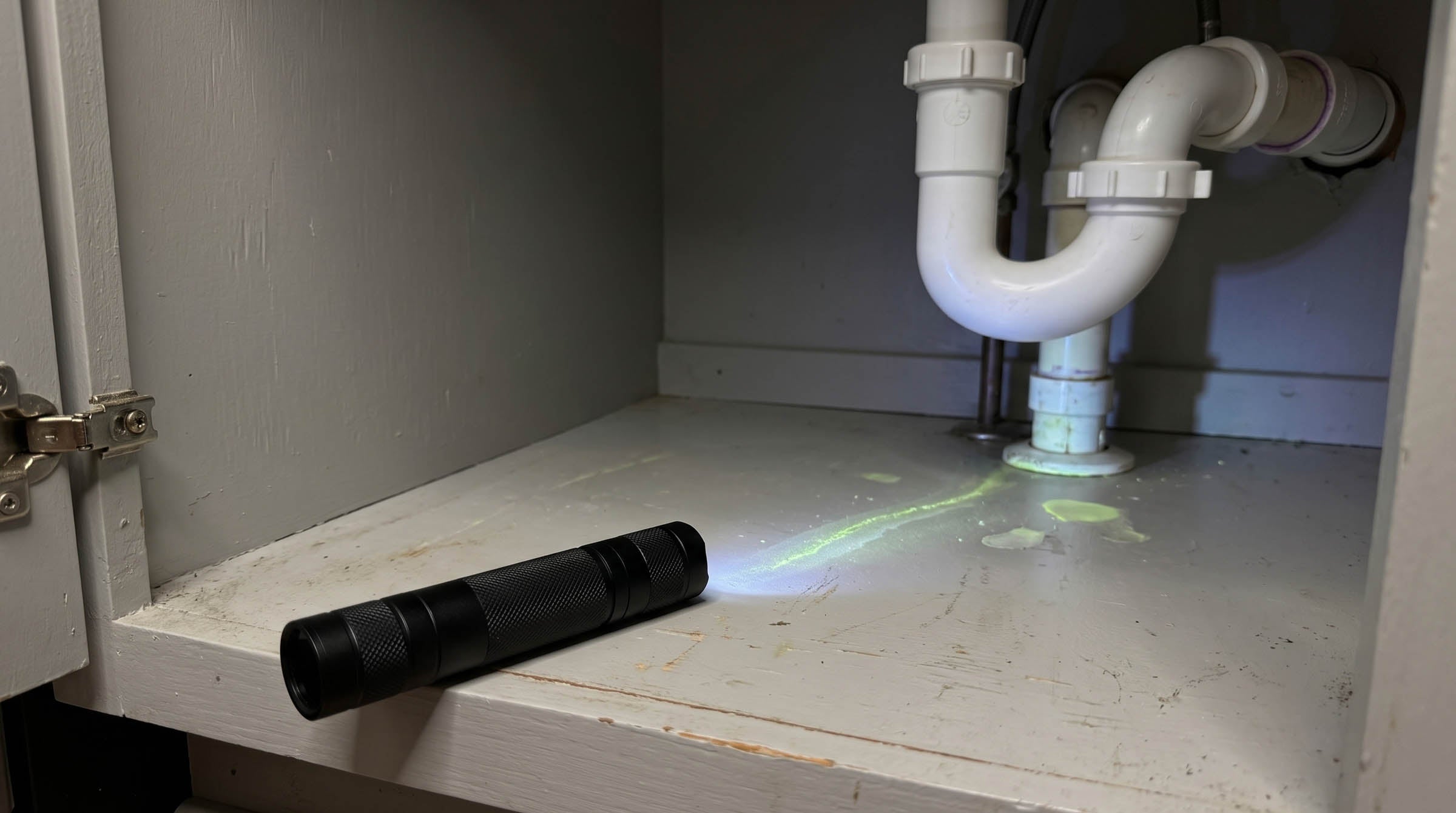
Technique matters more than coverage. Don’t scan every inch; work the likely spots — carpet near walls, rug edges, baseboards, corners, around pet doors and litter zones, bedrooms with odor, bathrooms, under sinks, laundry areas, entryways, turnovers. Kill the lights, move through one area at a time so you read patterns instead of random specks, and when something glows, weigh the shape, location, surface, and smell before you decide anything.
Pet history is where UV shines, with a caveat. Urine doesn’t always show under normal light, especially after a partial cleaning, so UV helps you locate areas worth a closer look — but a reaction near a pet zone is a lead, not a confession, and old stains can stay dark even when the smell won’t quit. Use it to find what’s worth discussing, cleaning, or treating before you commit to new flooring. And in bathrooms, laundry rooms, and under-sink spaces, resist the urge to call every glow mold — UV is not a mold detector or a moisture meter, and a reaction only earns concern when it lines up with odor, staining, soft material, or a leak history.
Learn more: Best UV Flashlight for Pet Stain Detection for Dogs and Cats
Learn more: Can a UV Flashlight Detect Mold? What Buyers Should Know
Why Scout Fits the Walkthrough
Since home inspection is close-range by nature — surfaces a few inches to a few feet away — the compact Scout 365nm is the practical pick: easy to carry through a walkthrough, easy to use in tight rooms, easy to keep with your gear. A bigger light works indoors, but it’s more than most home checks need.
Learn more: Best Compact 365nm UV Flashlight for Pet Stains, Hotel Rooms, and Home Inspection
A Simple Walkthrough Plan
1. Darken one area and scan the most likely surfaces slowly.
2. Treat fluorescence as a clue and compare it with location, pattern, odor, and visible condition.
3. Clean, ask the seller or manager, or involve the appropriate professional when the clue warrants it.
Bottom line: a UV flashlight is a genuine asset during a home inspection, and a filtered 365nm light like the Scout makes the clues easier to see. It reveals what normal light misses. It doesn’t tell you what’s wrong with the house — that’s still your judgment, a cleaning, or the right professional, depending on what the glow turns out to be.

Written by Pierce Henley
For more about Pierce's UV engineering background check out our about FORAY page.