

Best UV Flashlight for Fluorescent Minerals: What Actually Matters
Fluorescent-mineral hunting looks simple from the outside.
Point a UV flashlight at a rock. If it glows, pick it up.
The reality is more complicated.
Different minerals respond to different ultraviolet wavelengths. Two specimens carrying the same mineral name may react differently. A flashlight with a dramatic purple beam may make the search area look brighter while making weak fluorescence harder to distinguish.
The practical rule is:
Choose the flashlight for the mineral, the search area, and the wavelength—not for how bright the beam looks.
Why Some Minerals Fluoresce
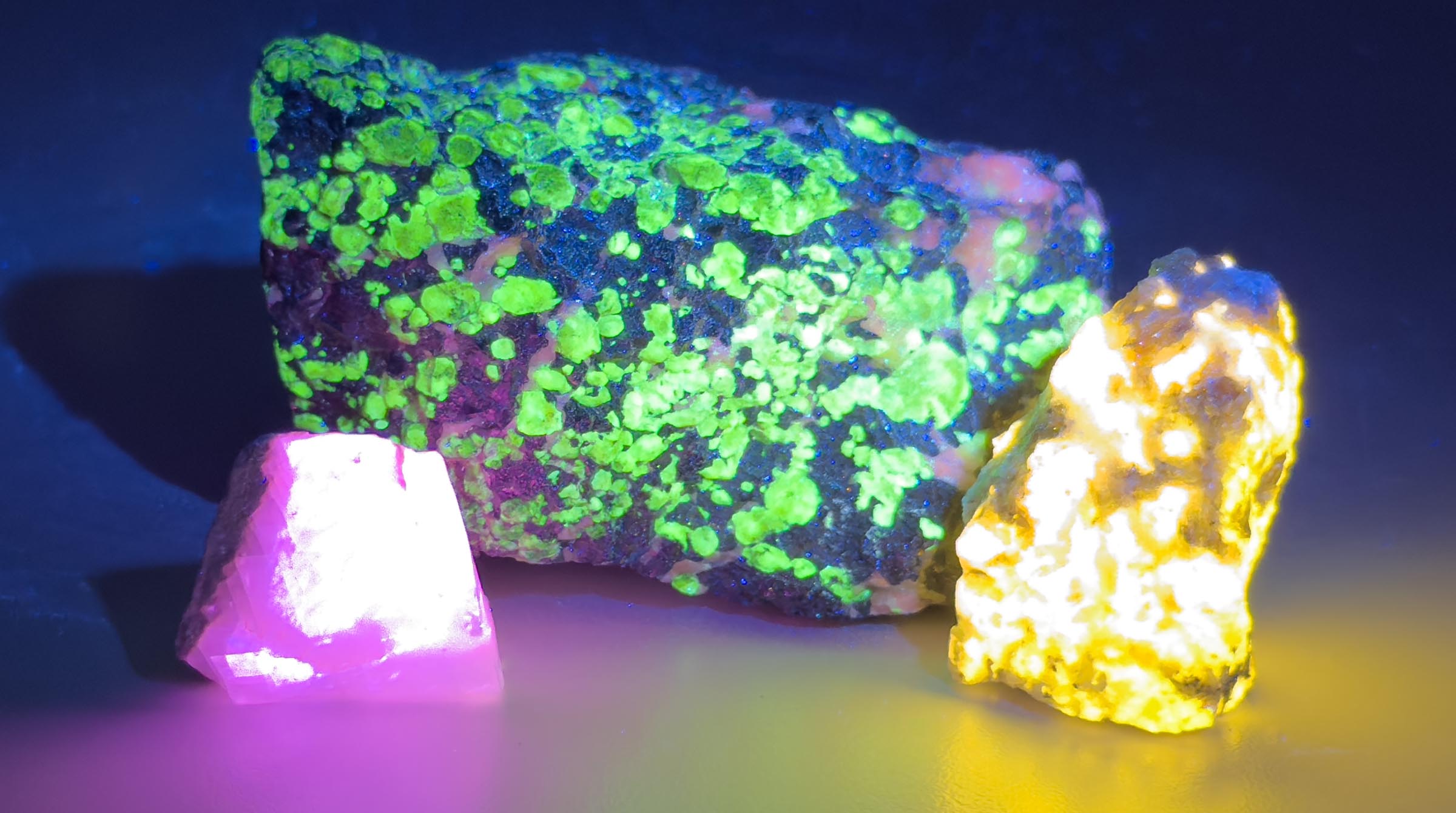
Fluorescence happens when a material absorbs ultraviolet energy and releases part of that energy as visible light.
The visible reaction may appear:
- Orange
- Green
- Blue
- Cyan
- Red
- Yellow
- White
- Another visible color
The response depends on more than the mineral’s name.
It may be influenced by:
- Chemical composition
- Trace activators
- Impurities
- Crystal structure
- Geographic origin
- Weathering
- Surface coatings
- The UV wavelength used
One specimen may produce a strong response while another specimen of the same general type barely reacts.
That variation is part of fluorescent-mineral collecting.
Start With the Right Wavelength
The first question is not how powerful the flashlight is.
The first question is:
Does the target mineral respond to this wavelength?
A 365nm flashlight produces longwave ultraviolet light.
Longwave UV is useful for many fluorescent materials and is especially practical for portable field searching.
However, some minerals respond better to:
- Shortwave UV
- Midwave UV
- More than one UV wavelength
A strong 365nm flashlight cannot force a shortwave-responsive specimen to fluoresce.
If a mineral does not react, the cause may be wavelength mismatch rather than insufficient flashlight power.
Where 365nm Longwave UV Works Well
A filtered 365nm flashlight is a useful field tool for:
- Yooperlites and other fluorescent sodalite-bearing rocks
- Certain calcite specimens
- Certain fluorite specimens
- Some aragonite
- Some opal
- Amber
- Uranium glass
- General fluorescence discovery
This is not a guarantee that every specimen in those categories will glow.
Mineral fluorescence varies with the individual sample.
A mineral name tells you what may happen.
The rock in front of you determines what actually happens.
Why 395nm Can Be Harder to Read
A 395nm blacklight operates close to the visible-light boundary.
It can reveal many fluorescent materials, but it also produces a large amount of visible purple light.
That purple spill may wash across:
- Rock surfaces
- Gravel
- Sand
- Pale minerals
- Wet stones
- Display shelves
A strong fluorescent reaction may still be obvious.
Weaker reactions can become harder to separate from the visible beam.
The search area looks brighter, but the target does not necessarily become easier to identify.
Why Filtered 365nm Looks Different
A filtered 365nm flashlight produces less visible violet interference.
A ZWB2 filter reduces additional visible spill passing through the front of the flashlight.
That creates a darker and cleaner search scene.
The fluorescent portion of the mineral can stand apart more clearly from:
- The host rock
- Surrounding gravel
- Sand
- Soil
- Nearby specimens
- The flashlight beam itself
The filtered beam may look less dramatic.
For inspection, that is often an advantage.
The Target Should Stand Out—not the Beam
A mineral flashlight should be evaluated by the reaction it produces from the target.
Ask:
- Does the fluorescent section separate clearly from the host rock?
- Can you distinguish weak fluorescent bands?
- Does the reaction remain recognizable among surrounding stones?
- Can you scan naturally without inspecting every rock individually?
- Does visible purple light interfere with what you are trying to see?
Do not judge the flashlight by pointing it at a blank wall.
A bright purple circle on drywall tells you very little about how the light performs on fluorescent minerals.
The rock is the test target.
Darkness Is Part of the Equipment
Fluorescence becomes easier to see as surrounding visible light decreases.
Strong specimens may react during dusk or in a partially darkened room.
Weaker fluorescence may require:
- Full darkness
- Reduced nearby white light
- Time for your eyes to adjust
- Closer inspection
- A different viewing angle
A good UV flashlight can appear disappointing when used under bright room lighting or before the sky becomes fully dark.
The surrounding conditions matter as much as the flashlight.
Beam Coverage Matters in the Field
Mineral hunting often involves searching more than one specimen at a time.
You may be scanning:
- A beach
- A gravel bar
- A rock pile
- A mine dump
- A collection table
- Uneven outdoor ground
A very narrow beam may produce a concentrated response but cover too little area for efficient searching.
A very broad beam may cover more ground but spread the available output across a larger area.
The useful balance depends on the job.
For field searching, the beam should provide enough coverage to scan naturally while still producing a recognizable reaction at the working distance.
Compact vs. Full-Size Mineral Lights
A compact UV flashlight works well when:
- The specimen is already in your hand
- You are inspecting a small collection
- You are checking one shelf or display
- Portability matters more than search coverage
- The target is close
A full-size field light is better suited to:
- Beach searching
- Rock piles
- Gravel bars
- Mine dumps
- Larger collections
- Longer nighttime searches
- Scanning from a standing position
The Scout 365 can confirm close-range fluorescence.
The Atlas 365 is the better match when mineral hunting is the primary field job.
Why a Bigger Light Is Not Automatically Better
A larger flashlight may provide better field coverage without being the right choice for every collector.
Someone inspecting specimens on a desk does not need the same tool as someone walking a shoreline at night.
The useful distinction is not:
- Beginner versus professional
- Cheap versus premium
- Weak versus strong
The useful distinction is:
- Close-range inspection
- Broader field searching
Choose the format that matches where the minerals will actually be examined.
How to Search for Fluorescent Minerals
A deliberate search pattern improves the odds of noticing weaker reactions.
For outdoor searching:
- Wait for full darkness when possible.
- Carry a separate white flashlight or headlamp for navigation.
- Scan a narrow section of ground at a time.
- Overlap each pass slightly.
- Move the beam slowly.
- Pause when you notice a fluorescent reaction.
- Examine the specimen from several angles.
- Confirm the rock under normal light before collecting it.
For indoor specimen inspection:
- Reduce the surrounding room light.
- Place the specimen against a dark background.
- Compare the reaction at more than one distance.
- Rotate the specimen slowly.
- Check whether the fluorescence comes from the rock or surface contamination.
The angle can matter.
A fluorescent vein or band may become visible only when the light reaches it from the right direction.
Surface Contamination Can Mislead You
Not every glowing rock contains a fluorescent mineral.
Surface materials may also react, including:
- Lichen
- Paint
- Plastic
- Adhesive
- Oil
- Organic residue
- Cleaning products
- Marking materials
A surface reaction may appear only in one patch and may not continue into the rock.
Examine questionable finds:
- Under normal light
- From several angles
- While wet and dry
- After gentle cleaning when appropriate
- Under more than one UV wavelength when available
Fluorescence is evidence.
It is not always identification.
Not Every Mineral Responds to 365nm
A 365nm flashlight is a longwave UV tool.
Some classic fluorescent minerals produce their strongest response under shortwave UV.
This matters when:
- Buying mineral kits
- Visiting fluorescent-mineral shows
- Evaluating labeled specimens
- Comparing your results with photographs online
- Building a specialized collection
A specimen that looks spectacular under a shortwave lamp may show little response under longwave UV.
That does not mean the flashlight is defective.
It means the wavelength and specimen are not well matched.
What Makes a Good Mineral-Hunting Flashlight?
For longwave mineral searching, look for:
-
365nm wavelength
Useful for many fluorescent materials with less visible violet interference than typical 395nm blacklights. -
A proper optical filter
Reduces visible purple spill and improves fluorescence contrast. -
Useful beam coverage
Matches the size of the search area. -
Practical working distance
Lets you scan without placing the lens directly against every specimen. -
Field-friendly handling
Matters during longer searches and on uneven ground. -
A suitable battery system
Supports the expected search session. -
Simple operation
The flashlight should remain easy to use in darkness. -
Honest wavelength limitations
No longwave flashlight reveals every fluorescent mineral.
The most useful mineral light is not the one making the largest purple spot.
It is the one that makes responsive minerals easiest to distinguish in the environment where you actually search.
The Bottom Line
A filtered 365nm flashlight is a strong tool for longwave fluorescent-mineral hunting.
It can provide cleaner fluorescence contrast with less visible purple interference and can be especially useful for Yooperlites, field searches, and general fluorescence discovery.
It will not reveal every mineral.
Some specimens require shortwave or other specialized UV equipment.
For close specimen checks, a compact light may be sufficient. For beaches, gravel bars, rock piles, and larger field searches, the Atlas 365 is the better-matched format.
Match the wavelength to the mineral—and the flashlight to the search.

Written by Pierce Henley
For more about Pierce's UV engineering background check out our about FORAY page.