

Why More Purple Light Does Not Mean More UV Power
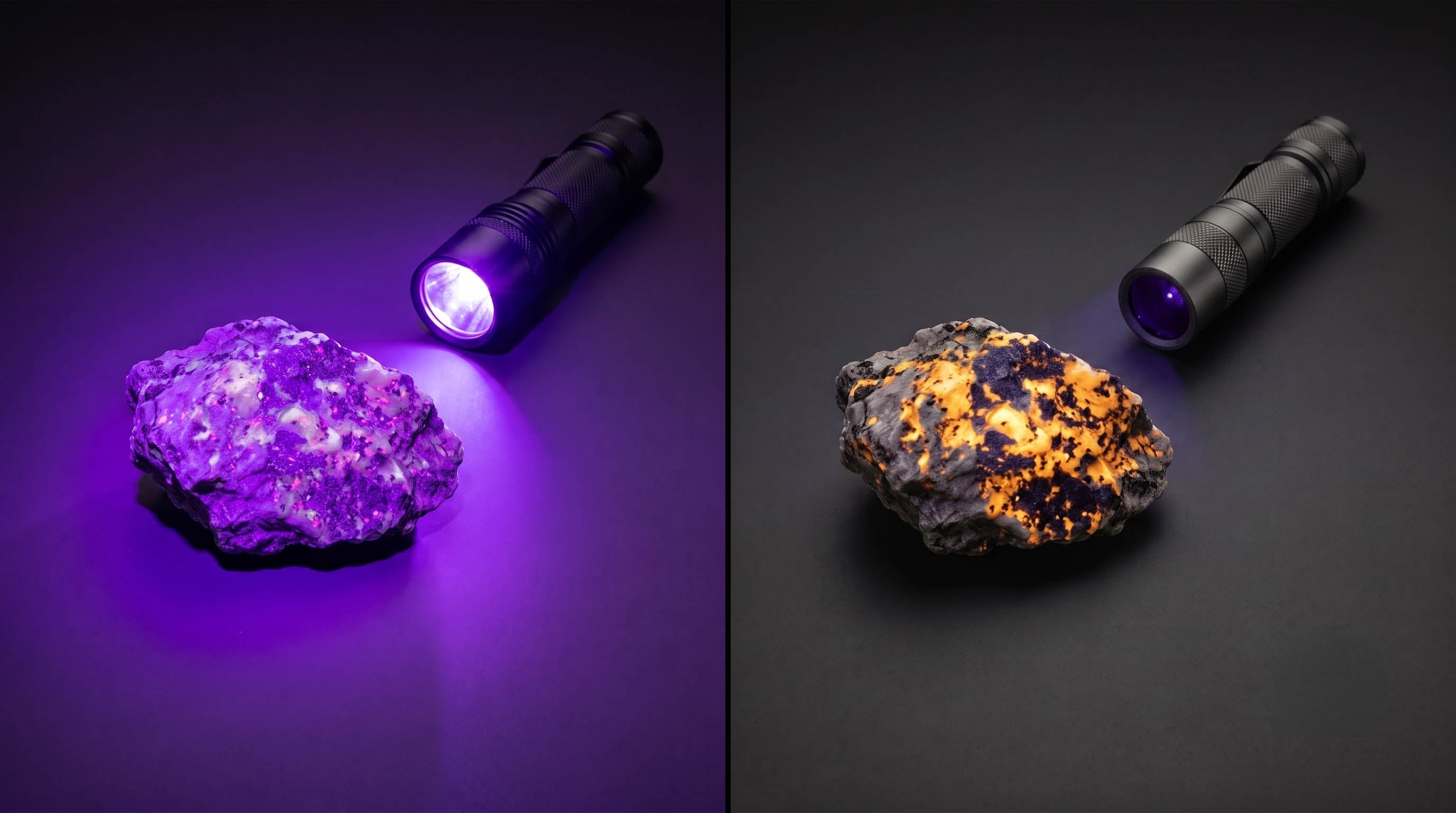
When a UV flashlight produces a dramatic purple beam, it is natural to assume it is powerful. But the purple you can see is visible violet spill. The performance you care about is whether enough suitable UV reaches the target to create a clear fluorescent reaction.
Your Eyes Cannot Measure UV Power
Start with the inconvenient truth: your eyes can’t see UV. When a flashlight blazes bright purple, you’re mostly seeing the visible violet spilling out of the beam — not the ultraviolet doing the actual work. That visible purple might be riding along with real UV, but it isn’t the same thing, which is exactly why eyeballing a UV light is a lousy way to judge one. Your eyes react to what they can see; the useful part is the part they can’t.
The Target Reaction Is the Evidence
Keep going: the beam is not the evidence. A UV flashlight is useful because it makes certain materials fluoresce — they absorb UV and throw back visible light you can see. That response is the clue, whether it’s a pet stain, a fluorescent mineral, uranium glass, a scorpion, or something suspicious in a hotel room. The purple beam itself proves nothing. It makes the flashlight look busy without telling you the target is reacting clearly.
Why Visible Spill Can Reduce Contrast
And too much visible purple actively hurts, because detection is a contrast problem. You want the target to stand out from its background, but a purple-heavy beam lights up the floor, the wall, your hand, and everything around the target too. Now your eyes are wading through glare and color instead of locking onto the fluorescence you came for. That’s how a blacklight that looks monstrous in a dark room inspects terribly in real use. The sharp question is “how clearly does the target show up,” never “how bright is the beam.”
Learn more: 365nm vs 395nm UV Flashlights: What’s the Difference?
Why Filtered 365nm Often Looks Calmer
This is where 365nm has a built-in edge. A good 365nm light simply throws less visible purple than a typical 395nm blacklight, so there’s less junk competing with the reaction. That doesn’t make every 365nm light well-built — it just means the wavelength itself creates less interference to fight through. Filtering pushes it further: a ZWB2 filter strips more of the visible spill, which is why a filtered light looks less flashy than a blacklight and reads better on the target. Less show, less distraction, cleaner inspection.
Learn more: Filtered vs Unfiltered 365nm UV Flashlights: Why Purple Light Matters
When Purple Effect Is the Goal
To be fair, purple isn’t always the enemy. For posters, parties, glow decorations, and casual blacklight fun, the dramatic purple wash is half the appeal, and a cheap 395nm light does that job cheerfully. The mistake is carrying that party standard over to detection. A light that’s perfect for a dorm wall is the wrong tool for pet stains, minerals, hotel rooms, or a field search.
Learn more: Best UV Flashlight for Fluorescent Minerals and Yooperlites
Ask Better Buying Questions
So stop shopping by how purple the beam looks and ask better questions: does the target stand out clearly, is the light built for detection or effect, is visible spill getting in the way, is it filtered, is the wavelength right for the job, and does the seller explain any of this or just post dramatic purple photos? A product shot can make almost any beam look impressive. Real inspection is less drama, more contrast.
Bottom line: visible purple light is not a UV power meter. Judge a UV flashlight by the target response, wavelength, filtering, measured irradiance under disclosed conditions, and fit for the job—not by how theatrical the beam looks.

Written by Pierce Henley
For more about Pierce's UV engineering background check out our about FORAY page.