

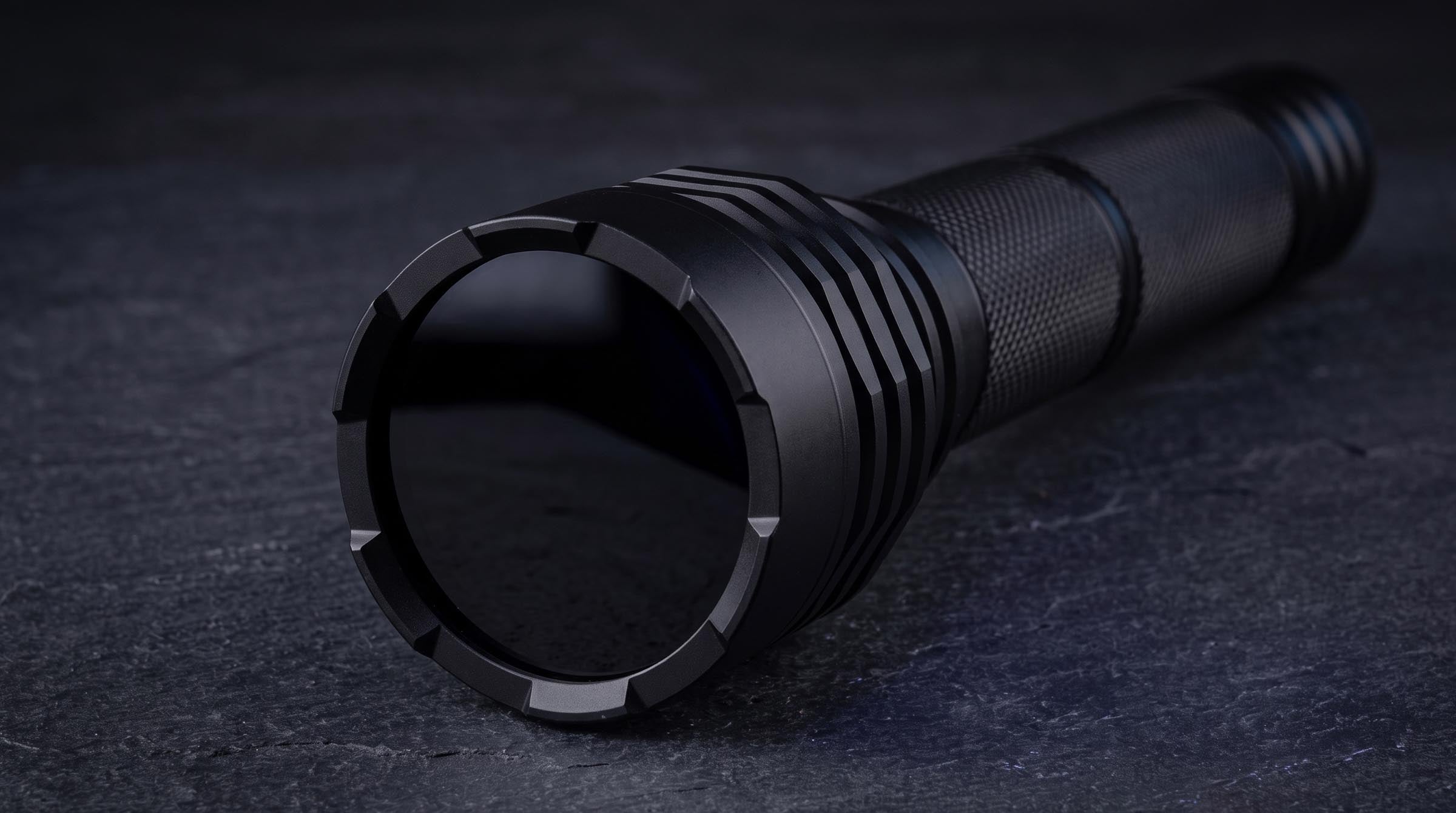
What Is a ZWB2 Filter in a 365nm UV Flashlight?
When you are trying to see fluorescence, visible purple light can compete with the glow you actually care about. A ZWB2 filter is the dark glass in front of a 365nm LED that reduces that purple and violet spill, giving the target a cleaner background.
What a ZWB2 Filter Does
Short version: a ZWB2 filter is dark UV filter glass that sits in front of the LED and cuts the visible purple and violet light that would otherwise ride along with the 365nm beam. Less visible spill, cleaner look at the target. That’s the whole function. It does not make the flashlight more powerful, and it doesn’t create fluorescence on its own — it just clears the visual noise so the reaction you care about has room to show.
Why a 365nm LED Still Benefits From Filtering
Why does a 365nm light need it at all? Because even a proper 365nm LED leaks some visible violet forward, and that’s the purple your eyes register. The ZWB2 catches most of it before it reaches the surface you’re inspecting. That’s exactly why a good filtered light looks calmer than a cheap purple blacklight while doing the harder job — there’s simply less garbage light in the way.
Learn more: Filtered vs Unfiltered 365nm UV Flashlights: Why Purple Light Matters
What the Filter Does Not Prove
ZWB2 identifies a category of UV filter glass, but the name alone does not prove that a flashlight is well designed. Two filtered lights can perform very differently because the LED, driver, battery, heat management, optics, and beam shape still determine how the complete tool behaves.
Why FORAY Uses ZWB2
FORAY uses actual ZWB2 filters across its 365nm line for one plain reason: visible purple gets in the way of inspection. The point was never a louder beam — it’s an easier-to-read reaction, and that holds whether it’s the compact Scout 365nm checking carpet, hotel bedding, and pet stains, or the larger Atlas 365nm reading rocks, glass, and dye out in the field. Different jobs, same reason to control the spill.
Learn more: Best UV Flashlight for Pet Stain Detection for Dogs and Cats
Where Cleaner Contrast Matters Most
Filtering helps most wherever contrast is the whole game — pet stains, hotel rooms, home inspection, uranium glass, Yooperlites, scorpions, and fluorescent rocks. One honest caveat for the mineral crowd, though: the filter cleans up the beam, but it can’t change which wavelength a mineral answers to. Many classic fluorescent minerals want shortwave UV, and no amount of ZWB2 on a 365nm light will make an unresponsive specimen glow. It only sharpens the reaction when the material actually responds to 365nm.
Learn more: Best UV Flashlight for Fluorescent Minerals and Yooperlites
Bottom line: a ZWB2 filter isn’t a magic upgrade and it doesn’t prove a light is good. What it does is cut visible purple spill — and for a 365nm inspection light, that’s a detail worth caring about.

Written by Pierce Henley
For more about Pierce's UV engineering background check out our about FORAY page.