
Article: The FORAY 365nm UV Flashlight System: Scout vs. Atlas

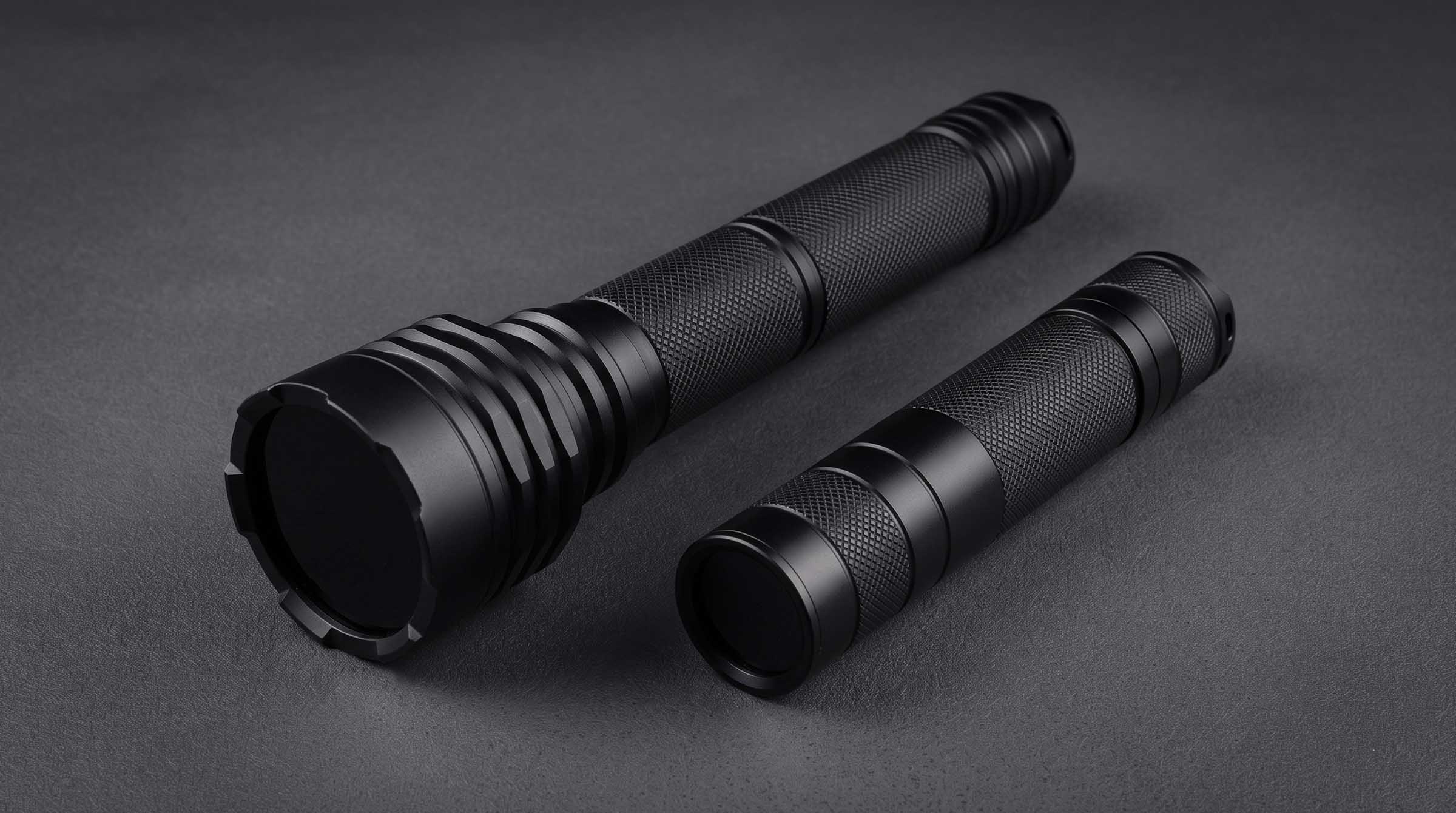
The FORAY 365nm UV Flashlight System: Scout vs. Atlas
FORAY does not divide its UV flashlights into beginner and advanced models.
The Scout 365 and Atlas 365 use the same basic inspection principles:
- 365nm ultraviolet light
- ZWB2 filtering
- Reduced visible purple spill
- Clearer fluorescence contrast
- Straightforward operation
The difference is the job each flashlight is built to perform.
Scout is designed for close-range inspection. Atlas is designed for broader field searching.
One is not the lesser version of the other.
They are two tools built around different working environments.
Why FORAY Uses Two Formats
UV flashlight buyers are often encouraged to shop by size, power claims, or the number of LEDs.
That approach ignores how the flashlight will actually be used.
Checking carpet beside a sofa is not the same job as scanning a rocky shoreline.
Inspecting uranium glass in an antique store is not the same job as searching a yard for scorpions.
The target may fluoresce under the same general wavelength, but the working distance, search area, and handling requirements are different.
FORAY separates those jobs into two formats:
Scout 365
Built for:
- Close inspection
- Indoor use
- Travel
- Small spaces
- Objects within arm’s reach
Atlas 365
Built for:
- Broader coverage
- Outdoor searching
- Field use
- Larger inspection areas
- Targets farther from the flashlight
The product choice begins with the job—not the price.
What Scout 365 Is Built For
Scout is the compact inspection model.
It is designed for situations where the target is directly in front of you, on the floor, on a counter, inside a room, or already in your hand.
Common uses include:
- Pet-stain detection
- Carpet and rug inspection
- Hotel-room checks
- Rental-property walkthroughs
- Home inspection
- Uranium-glass hunting
- Currency and document screening
- Small leak-dye inspections
- General close-range fluorescence checks
These jobs reward:
- Portability
- Control
- Easy positioning
- Convenient storage
- Quick access
- A useful close-range beam
Scout is small because the work is close.
That is its purpose—not a limitation.
What Atlas 365 Is Built For
Atlas is the full-size field model.
It is designed for situations where the search area is larger and the target may be several feet away.
Common uses include:
- Fluorescent-mineral hunting
- Yooperlite hunting
- Beach rockhounding
- Scorpion hunting
- Larger leak-dye inspections
- Outdoor field inspection
- Scanning gravel, soil, or uneven ground
- Examining larger collections
These jobs place more emphasis on:
- Search coverage
- Working distance
- Field handling
- Longer inspection sessions
- Searching from a natural standing position
- Covering ground efficiently
Atlas is larger because the search area is larger.
Both Use Filtered 365nm UV
Scout and Atlas are both built around 365nm ultraviolet light and ZWB2 filter glass.
The filter reduces visible violet spill coming through the front of the flashlight.
That can help fluorescent targets stand apart more clearly from the surrounding surface.
This matters during both close-range and field work.
For Scout, filtering helps when inspecting:
- Carpet
- Bedding
- Upholstery
- Glass
- Documents
- Painted surfaces
For Atlas, filtering helps when searching:
- Rocks
- Gravel
- Sand
- Soil
- Concrete
- Outdoor surfaces
The application changes.
The purpose of the filter remains the same:
Reduce visual interference so the fluorescent target is easier to see.
Why Visible Purple Light Is Not the Goal
A UV flashlight may look powerful because it fills the area with visible purple light.
That visible beam is not the inspection target.
The fluorescent reaction is the target.
A purple-heavy flashlight can tint the surrounding surface and compete with the reaction you are trying to observe.
A filtered 365nm light often appears visually calmer because less unwanted violet light reaches the target.
That calmer appearance is intentional.
The light should help reveal:
- A stain
- A fluorescent mineral
- A dye trail
- A scorpion
- A piece of uranium glass
- A document feature
It does not need to turn the entire environment purple.
Close-Range Inspection vs. Field Searching
The easiest way to understand the two models is to consider how much area must be searched.
Close-range inspection
You generally know where the target may be.
You are examining:
- One room
- One section of carpet
- One piece of furniture
- One object
- One shelf
- One document
Scout fits this work because the flashlight can remain close to the target.
Field searching
You are trying to locate the target within a larger environment.
You may be scanning:
- A beach
- A yard
- A campsite
- A gravel bar
- A rock pile
- A larger equipment compartment
Atlas fits this work because the flashlight needs to cover more area from a practical distance.
When Scout Is the Better Choice
Choose Scout when your primary use involves:
- Pet stains
- Hotels
- Rentals
- Carpet
- Baseboards
- Upholstery
- Uranium glass
- Travel
- Close document inspection
- Objects already in your hand
Scout is also the easier light to:
- Keep in a drawer
- Carry in a bag
- Store with cleaning supplies
- Bring into an antique store
- Use around furniture
- Position inside a small room
A larger flashlight can perform many of these checks.
It is simply more equipment than the job requires.
When Atlas Is the Better Choice
Choose Atlas when your primary use involves:
- Minerals
- Yooperlites
- Beaches
- Rock piles
- Scorpions
- Outdoor searching
- Larger work areas
- Targets farther from the light
- Longer field sessions
Atlas is the better fit when you need to scan rather than simply inspect.
A compact flashlight may reveal the same target once you are close.
Atlas is designed to help you locate it across a broader search area.
When Either Model Can Work
Some uses fall between the two formats.
Examples include:
- Uranium-glass collections
- Leak-detection dye
- Home inspection
- Small mineral collections
- General fluorescence discovery
In these cases, choose according to the working environment.
Choose Scout when:
- The target is close
- Portability matters
- The inspection area is small
- The flashlight needs to travel
Choose Atlas when:
- The area is larger
- More coverage is useful
- You are working outdoors
- The target may be farther away
The material does not always determine the model.
The way you search for it often does.
Do You Need Both?
Many buyers only need one model.
A pet owner primarily checking carpet may only need Scout.
A rockhound primarily searching beaches may only need Atlas.
Other users genuinely have two different jobs:
- Indoor inspection
- Outdoor searching
In that case, owning both is not duplication.
It is similar to owning:
- A compact work light for close tasks
- A larger field light for broader coverage
The wavelength may be the same.
The working format is different.
What Neither Flashlight Can Do
Scout and Atlas are inspection tools.
They reveal fluorescence.
They do not automatically identify the substance or material producing the reaction.
Neither flashlight can:
- Prove that a glowing spot is urine
- Diagnose mold
- Authenticate currency or documents
- Identify a mineral with certainty
- Diagnose the source of a mechanical leak
- Prove that an area is free of scorpions
- Reveal material hidden behind solid surfaces
The flashlight provides visual evidence.
Interpretation still requires:
- Context
- Technique
- Reference information
- Further testing
- Professional judgment when appropriate
How to Choose
Ask four questions:
-
Where will I use the flashlight?
Indoors and close, or outdoors across a wider area? -
How far away is the target?
Within arm’s reach, or several feet away? -
How much ground must I cover?
One object or room, or an entire search area? -
How portable does the flashlight need to be?
Pocket or travel-bag size, or a dedicated field tool?
The answers usually make the decision clear.
The Bottom Line
Scout and Atlas are not two levels of the same UV flashlight.
They are two job-specific formats built around filtered 365nm inspection.
Choose Scout for:
- Close-range work
- Pet stains
- Hotels
- Homes
- Travel
- Objects in your hand
Choose Atlas for:
- Minerals
- Yooperlites
- Scorpions
- Outdoor searching
- Larger areas
- Greater working distances
Scout inspects what is close. Atlas searches what is farther out.

Written by Pierce Henley
For more about Pierce's UV engineering background check out our about FORAY page.