

Can a UV Flashlight Detect Mold? What Buyers Should Know
Can a UV flashlight detect mold? No. A glowing patch can help direct your attention, but it cannot identify mold or tell you whether a surface is safe.
A handheld 365nm light can make residue, stains, coatings, fibers, dust, adhesives, and some moisture-related marks fluoresce. Because many unrelated materials react, a glow cannot diagnose mold. The useful outcome is narrower: finding a surface or pattern that deserves closer inspection.
Why a Glow Cannot Identify Mold
Here’s why people fall for it. UV makes lots of stuff fluoresce, so folks see a glowing patch, connect “UV” with “mold,” and call it a day. But cleaning products, fibers, dust, caulk, sealers, paint, and plain old water stains all light up too. Some mold-adjacent areas glow; some don’t; some totally innocent spots glow like crazy. The flashlight can tell you something is reacting. It can’t tell you why.
What UV Can Help You Notice
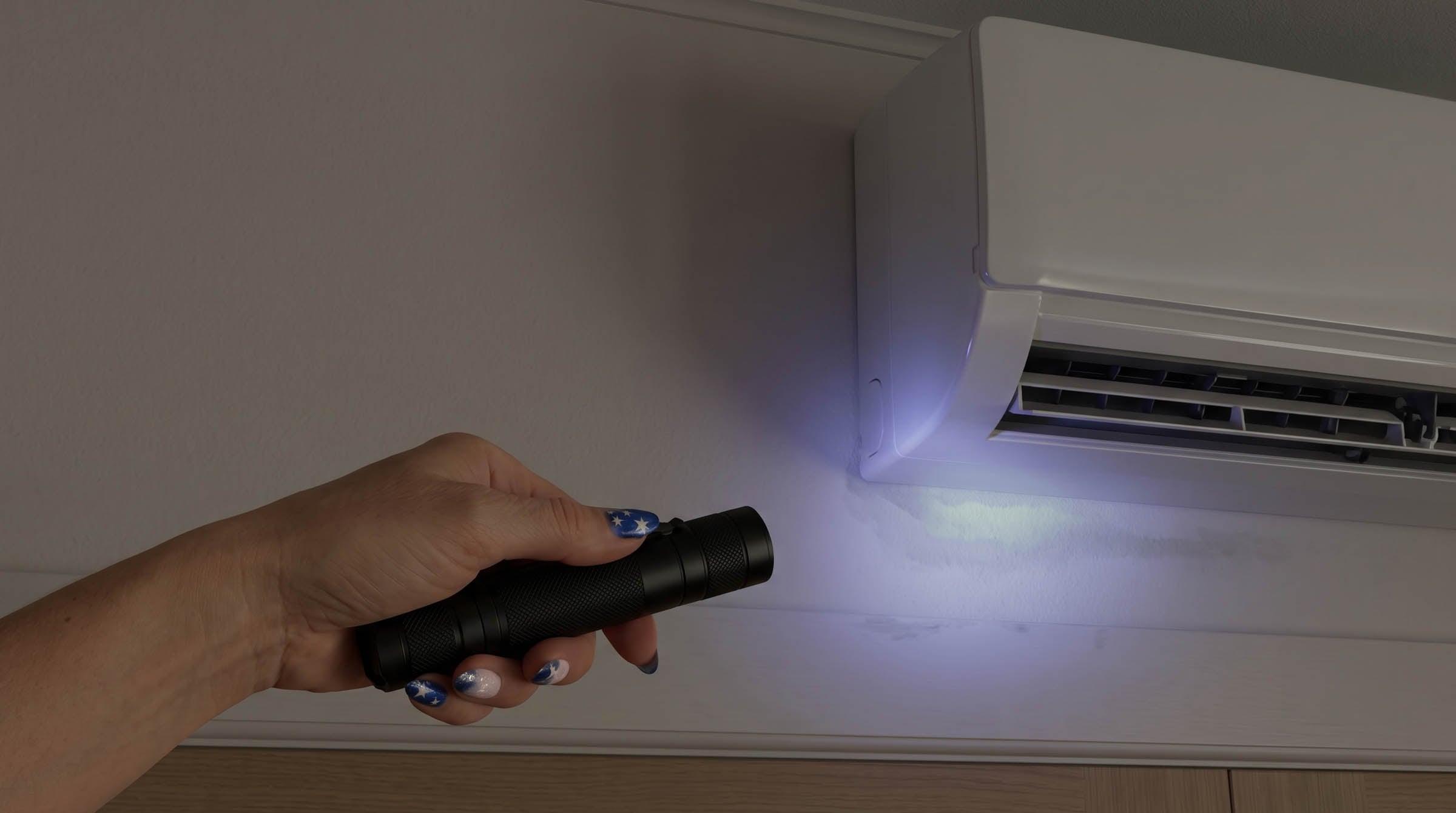
What it’s actually good for is pointing you at places worth a closer look. Run it around the usual moisture suspects — under sinks, bathroom floors, around toilets, tubs, and showers, laundry areas, basement corners, water heaters, window sills, behind appliances, and any cabinet that smells off — and it’ll flag stains, residue trails, and surface patterns that ordinary light glosses over. If a glowing area also has odor, visible staining, dampness, soft material, or a known leak history stacked behind it, now you’ve got a real reason to dig in. The glow is one clue in a stack, not the case.
Learn more: UV Flashlight for Home Inspection: What Buyers Should Know
Follow the Moisture Story
Which leads to the thing that matters more than any glow: moisture. Mold is a moisture problem. So the useful question isn’t “does this spot fluoresce,” it’s “why is this area suspicious at all?” Odor, water history, staining, condensation, soft or damaged material, bad ventilation — that’s the real investigation. UV might hand you a surface clue, but the source and the fix live in the moisture story, not the beam.
Why Filtered 365nm Can Clarify Surface Clues
A good 365nm light still earns its place in an inspection kit, just for the right reason. Compared to a cheap 395nm blacklight, it throws far less visible purple, so subtle surface reactions on paint, tile, grout, drywall, and wood read more clearly instead of washing out in haze. The ZWB2 filter is what buys you that clean contrast — it cuts the visible spill so a faint reaction separates from the surface around it. None of that turns the light into a diagnostic tool. It just makes the clues easier to see.
Learn more: 365nm vs 395nm UV Flashlights: What’s the Difference?
Learn more: What Is a ZWB2 Filter in a 365nm UV Flashlight?
What a Clean Scan Cannot Prove
Two failure modes to keep in mind, because they cut both ways. Treat every glow as mold and you’ll tear apart a wall over a detergent smear. But a clean scan proves nothing either — mold hides behind drywall, under flooring, inside cabinets, and above ceilings, none of which a surface light can see. No glow does not mean no problem. UV is never a clearance tool.
Inspection UV Is Not Mold-Killing UV
And to kill one more crossover myth: a 365nm inspection flashlight is not a mold-killing device. It’s not a UVGI purifier, not an HVAC disinfection lamp, not remediation gear. Those are a different product category built for different jobs. This light is for spotting fluorescent clues, full stop.
A Better Mold-Concern Plan
1. Look and smell for visible growth, staining, dampness, damage, and musty odors.
2. Use UV only to flag surface reactions that may deserve a closer look.
3. Find and correct the moisture source, and bring in qualified help when needed.
If you find visible mold, a persistent musty odor, water damage, soft material, or an active leak, investigate and correct the moisture source. Bring in qualified help when the cause or extent is unclear.
Sources for Mold Guidance

Written by Pierce Henley
For more about Pierce's UV engineering background check out our about FORAY page.