

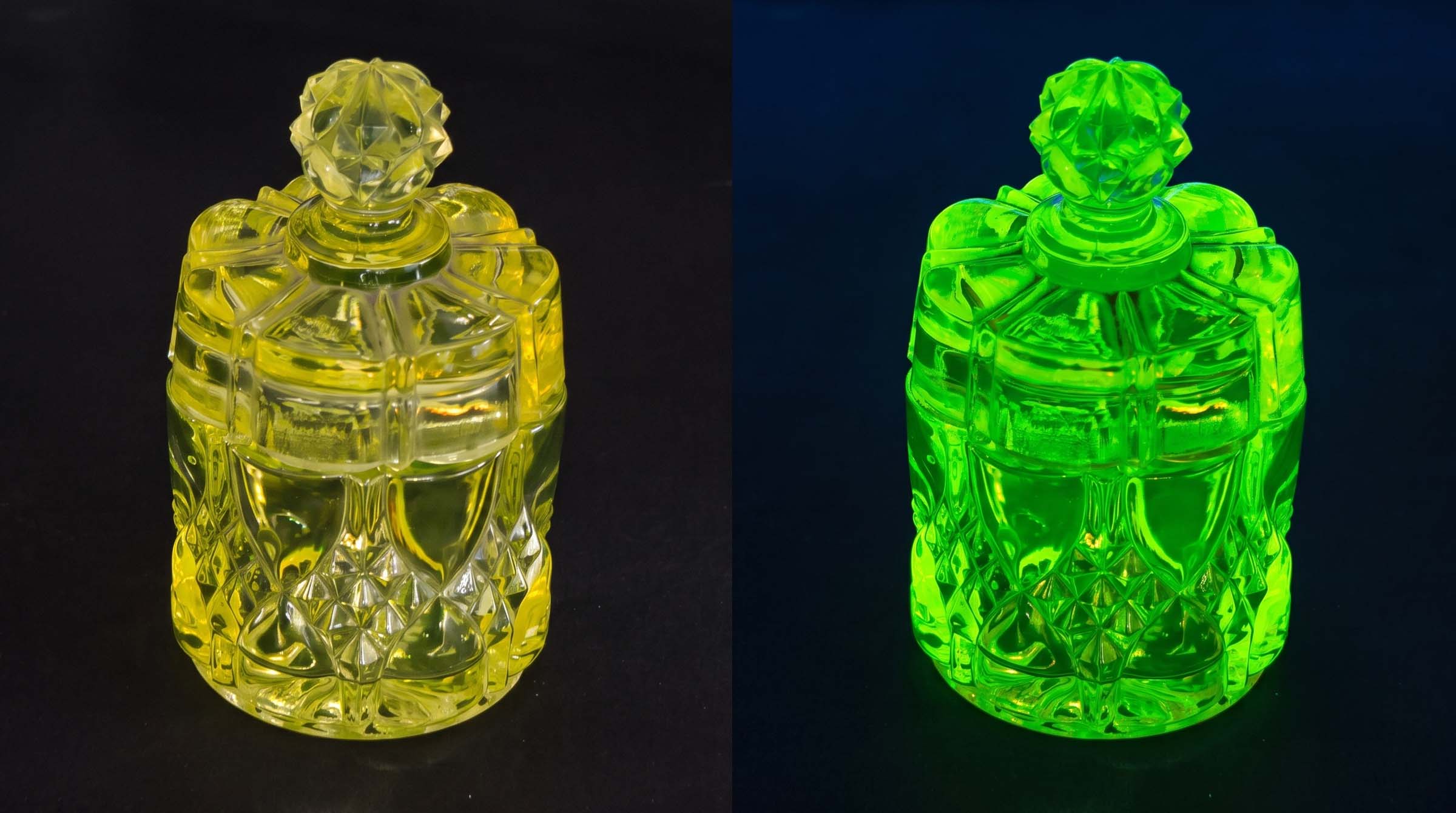
Best UV Flashlight for Uranium Glass: 365nm vs. 395nm
When you are checking glass in an antique shop, estate sale, or flea market, you want the green fluorescence to separate clearly from shelves, tags, dust, and surrounding objects. Both 365nm and 395nm can make uranium glass glow, but they do not give you the same viewing conditions.
365nm vs 395nm for Uranium Glass
The usual question is “365nm or 395nm?” and the honest answer is: both make uranium glass glow, but they don’t make it equally easy to read. A cheap 395nm blacklight will get a reaction, and it’s usually the cheaper light. The catch is that it also floods the area with visible purple, so you end up squinting at a green glow through a purple haze — with the shelf, the price tag, and the dust all glowing along for the ride.
Why Filtered 365nm Gives a Cleaner Read
A filtered 365nm light usually produces less visible purple spill, allowing the glass’s green fluorescence to stand out more clearly against a cluttered background. A 395nm light can still trigger a reaction and may be sufficient for casual checks at home; filtered 365nm is the cleaner inspection choice when the setting is busy.
Learn more: 365nm vs 395nm UV Flashlights: What’s the Difference?
What the ZWB2 Filter Contributes
The filter is doing the heavy lifting there. A ZWB2 filter scrubs the leftover visible purple off the beam so what you see is the reaction, not the flashlight. It looks less theatrical than a raw blacklight, which throws people, but for reading a real fluorescent response in a bright, busy store, less spill is the whole point.
Learn more: What Is a ZWB2 Filter in a 365nm UV Flashlight?
What a UV Glow Cannot Prove
Now the part worth tattooing on the inside of your eyelids: a UV glow tells you the glass fluoresces. It does not authenticate the piece, name the maker, date it, appraise it, or measure radioactivity. It’s a screening tool, not an appraiser. Plenty of green glass isn’t uranium glass, plenty of other materials fluoresce, and value still rides on pattern, condition, rarity, maker, and demand. Use the glow as a strong first clue, then confirm with everything else you’d normally check. If you’re about to drop real money, the flashlight is step one, not the verdict.
How to Check Glass in a Store
Technique in a store is quick. Get the light close enough that the glass actually reacts, and if you’re under bright retail lighting, shade the piece with your hand or step somewhere dimmer (with permission). Make sure the glass itself is glowing, not the tag, the shelf, or a smear of residue on the surface — a true reaction follows the glass at every angle. Residue glows where it sits; uranium glass glows all the way through.
Why Scout Fits the Hunt
Size-wise, this is close-range work almost by definition. You’re a foot from a shelf, being slightly discreet, moving quickly through a booth. A compact light like the Scout 365nm is the natural fit — pocketable, easy to aim, and clean enough for a proper read. The bigger Atlas 365nm only makes sense if you’re checking a large collection, scanning from farther back, or already own it for minerals and field work and just want one light to do double duty.
Learn more: Best Compact 365nm UV Flashlight for Pet Stains, Hotel Rooms, and Home Inspection
A Simple Glass-Checking Plan
1. Dim or shade the area enough to see the reaction clearly.
2. Confirm that the glass itself fluoresces rather than a tag, shelf, coating, or residue.
3. Treat the glow as a screening clue and verify age, maker, condition, and value separately.
Bottom line: both wavelengths can reveal uranium glass, but filtered 365nm usually gives a cleaner read in a busy setting. Scout fits the close-range search.

Written by Pierce Henley
For more about Pierce's UV engineering background check out our about FORAY page.