

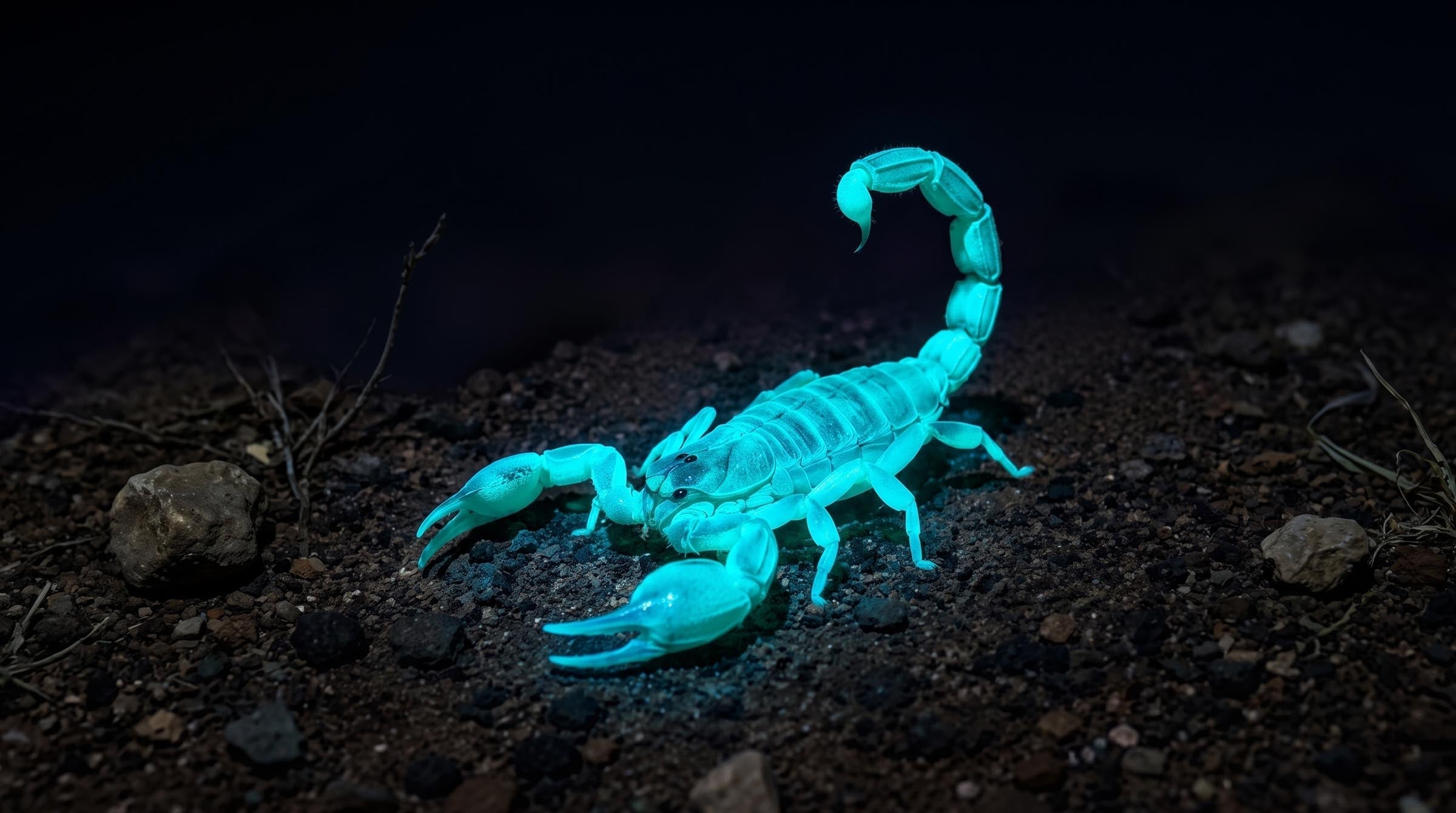
Best UV Flashlight for Scorpion Hunting: What Actually Matters
When you are checking a doorway, campsite, wall, or yard after dark, the goal is to make a small scorpion stand out before you step or reach near it. Many scorpions fluoresce under UV, but the light still needs enough contrast, coverage, and useful distance for the area you are scanning.
A purple-heavy blacklight may reveal a nearby scorpion on a simple surface, yet become harder to read across gravel, block walls, landscaping, and uneven ground. Visible purple spill competes with the small fluorescent target you are trying to notice.
Why Filtered 365nm Helps
For scorpion searches, filtered 365nm is useful because it reduces visible purple spill and improves contrast. That helps the fluorescent target separate from cracks, shadows, rough ground, and surrounding surfaces. It does not guarantee that every scorpion, angle, or hiding place will produce an obvious glow.
Learn more: Why More Purple Light Doesn’t Mean More UV Power
What UV Cannot Guarantee
Let’s be clear about what UV does and doesn’t do here, because this is the one use where getting cocky can literally get you stung. UV makes many scorpions easier to see. That’s it. It doesn’t repel them, kill them, prevent stings, or prove an area is clear. A clean scan is not a safety certificate. Don’t reach into gaps, flip rocks, or put your hands anywhere you haven’t lit up and looked, and don’t let a dark patch convince you nothing’s there — it might just not be reacting from that angle. Wear real footwear, scan ahead of where you’re about to step or reach, and treat the light as your eyes, not your bodyguard.
Learn more: Are 365nm UV Flashlights Safe? What Buyers Should Know
Choose Scout or Atlas by Search Area
Size comes down to how much ground you’re covering. For close checks — a doorway, a garage corner, a patio edge, the shoes you left outside, gear at a campsite — a compact light like the Scout 365nm is plenty and easy to keep on you. But scorpion hunting usually means scanning real area: yards, walls, fences, gravel, landscaping borders. That’s where the Atlas 365nm earns its size, giving you the coverage and reach to work outward instead of crawling along inches from every surface.
Learn more: Compact vs Full-Size UV Flashlights: Which One Should You Buy?
Useful Distance Matters More Than Beam Distance
Pay attention to useful distance, not beam-you-can-see distance. Outdoors, in the dark, you don’t want to be nose-to-wall with every surface. The real question is whether a scorpion still glows clearly at the range you’re scanning from — which depends on the light, the surface, and the conditions, and which is exactly the spec bargain lights fudge. A “long range” beam that stops making scorpions glow at ten feet isn’t long range for hunting.
How to Scan
Technique is simple. Search in real darkness. Move the beam slowly enough that your eye can catch a small glow. Sweep in sections rather than whipping it around. Watch the ground and vertical surfaces ahead of you, and give extra attention to edges, cracks, rocks, and gaps. See a glow, confirm the shape from a safe distance before you get close.
A Simple Scorpion-Search Plan
1. Use a white light to move safely, then scan likely surfaces with UV.
2. Sweep slowly in sections and confirm any glow from a safe distance.
3. Keep hands and feet out of unchecked gaps, and never treat a clean scan as proof that the area is clear.
Bottom line: the best scorpion light isn’t the one with the loudest purple beam. It’s the filtered 365nm light that makes the target pop without turning the yard into a rave — the Scout for close checks, the Atlas for covering ground. It’ll help you find them. Staying un-stung is still on you.

Written by Pierce Henley
For more about Pierce's UV engineering background check out our about FORAY page.