
Article: 365nm vs 395nm UV Flashlights: What’s the Difference?

365nm vs 395nm UV Flashlights: What’s the Difference?
When you are trying to reveal a pet stain, fluorescent rock, security feature, or other UV-reactive target, the beam itself is not the result. The result is whether the target stands out clearly enough to recognize. That is why choosing between a 365nm and 395nm UV flashlight matters.
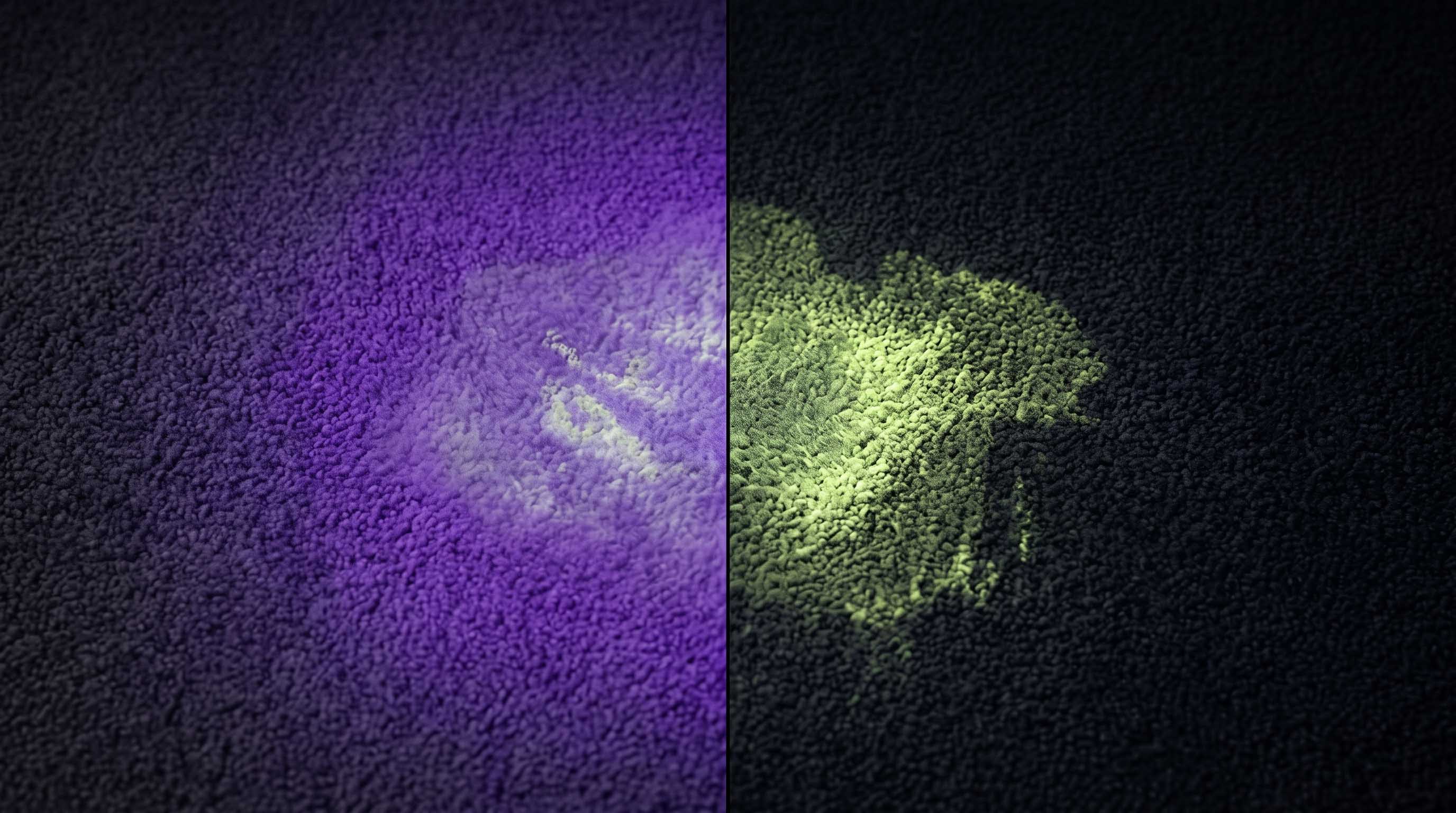
The wavelength printed on the light changes both the visible beam and the way different materials respond. A typical 395nm blacklight produces more visible violet, so it often looks brighter. A filtered 365nm light usually creates a darker viewing background, which can make fluorescence easier to read in many inspection and search tasks.
Why 395nm Looks Brighter
A 395nm light looks bright because a big chunk of its beam is visible violet, the light your eyes can actually see. So it feels powerful. It floods the room with purple, and your brain goes “yep, that’s working.” But visible purple light and useful UV fluorescence are two completely different things, and mixing them up is exactly how people end up disappointed. The real question was never which light looks brighter. It’s which light shows you the thing you’re hunting for.
Learn more: Why More Purple Light Doesn’t Mean More UV Power
Short version: 395nm is inexpensive and useful when visible blacklight effect is part of the goal. Filtered 365nm is usually the better starting point when clean fluorescence contrast matters. Neither wavelength guarantees that every material will react, and neither label proves the flashlight is well designed.
The physics is refreshingly petty about it. 395nm sits right next to visible violet, so most of the beam lands where your eyes can see it. Great for parties, terrible for contrast. When you’re after a stain, a mineral, or a scorpion, you don’t want the whole room lit up like a rave. You want one target to pop against a dark background. All that 395nm spill floods the scene and drowns the signal. Bright beam, weak result.
Why Filtered 365nm Can Improve Contrast
365nm sits farther from visible violet, so a well-designed 365nm light can produce less visible purple spill. With less competing light, fluorescence often becomes easier to distinguish. Material response still varies: some targets respond well to longwave 365nm, while some fluorescent minerals require a different wavelength altogether.
Wavelength Is Only the Starting Point
Now, before you buy the first thing stamped “365nm” and call it a night, don’t. The number is a starting point, not a badge of honor. A bad 365nm light will still let you down. The wavelength tells you nothing about how much usable UV actually comes out the front, how much visible light leaks past, or whether the thing survives a single drop. 365nm is where you start. It is not where you stop thinking.
This is also where a filter quietly earns its keep. The better 365nm lights, ours included, run a ZWB2 filter that strips out the visible purple hitching a ride on the beam. To your eyes it looks less dramatic, so people assume it’s weaker. It isn’t. There’s just less garbage light in the way, which hands your target a clean, dark stage to glow on. Less show, more results.
Learn more: What Is a ZWB2 Filter in a 365nm UV Flashlight?
Match the Wavelength to the Job
Filtered 365nm is a strong fit for pet-stain searches, hotel and home inspection, uranium glass, Yooperlites, scorpions, and many other tasks where contrast matters. A 395nm light still makes sense for posters, parties, glow decorations, and casual checks where cost and visible effect matter more. The problem is not that one wavelength is always bad. It is choosing a light whose strengths do not match the job.
The mistake under all of this is trusting your eyes. They’re fantastic at seeing purple and completely hopeless at measuring how much real UV reaches a target. Brighter-looking almost never means better-performing, and the marketing is counting on you not knowing the difference.
Learn more: Why Lumens Don’t Measure UV Flashlight Performance
Then Choose the Right Size
Once you’ve settled on 365nm, the only question left is size. For close-up indoor work, carpet, baseboards, hotel bedding, currency, small stuff, the compact Scout 365nm is the one that lives in a drawer and comes out when something looks off. For field work, scanning ground, walking a beach for Yooperlites, sweeping a yard for scorpions, the bigger Atlas 365nm brings the coverage and sustained output a pocket light was never going to give you. Same wavelength, same clean filtered beam, just sized to the job.
Choose in Three Steps
1. Identify the target and confirm which UV wavelength can excite it.
2. Decide whether you need clean inspection contrast or a visible blacklight effect.
3. Compare filtering, measured output, beam shape, and size before you buy.
365nm and 395nm are not interchangeable tools. Start with the target, decide whether clean contrast or visible blacklight effect matters more, and then evaluate filtering, output, beam shape, and size.

Written by Pierce Henley
For more about Pierce's UV engineering background check out our about FORAY page.